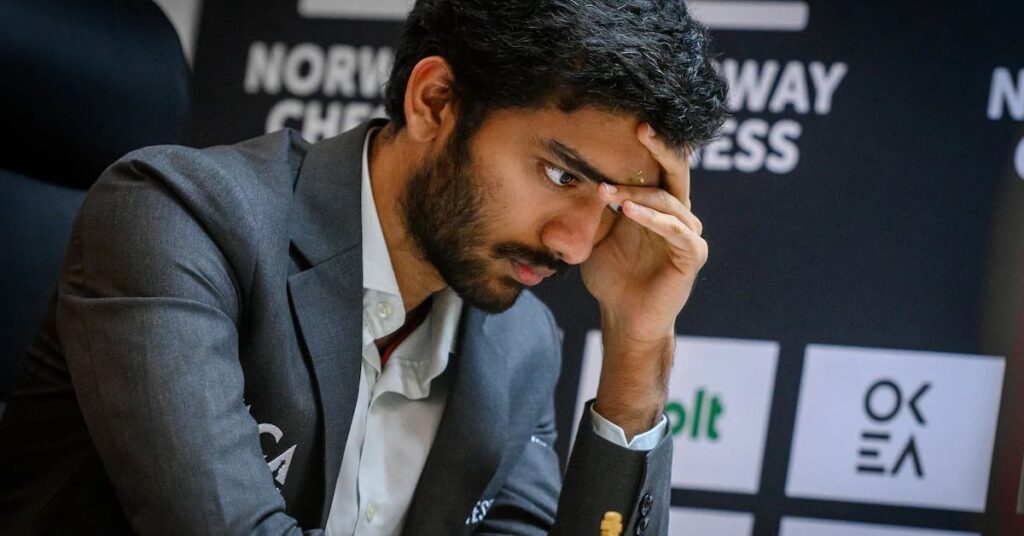

Indian chess prodigy D Gukesh produced a resilient and composed performance to bounce back with a crucial win against Vladimir Fedoseev at the Tata Steel Masters, reaffirming his fighting spirit in one of the toughest classical chess tournaments in the world. After facing setbacks earlier in the event, the young Indian grandmaster showed maturity beyond his years, delivering a technically sound and psychologically strong victory against the experienced Russian GM.
The Tata Steel Masters, often referred to as the “Wimbledon of Chess,” is renowned for its elite field, unforgiving schedule, and intense competitive pressure. A comeback victory in such a tournament is not just about points—it is about confidence, character, and championship temperament.
This blog offers a detailed, SEO-optimised analysis of D Gukesh’s win over Vladimir Fedoseev, covering the game’s strategic themes, Gukesh’s mental recovery, tournament implications, and what this performance means for Indian chess on the global stage.
Tata Steel Masters: The Ultimate Test in Classical Chess
The Tata Steel Masters is widely considered one of the most prestigious tournaments in the chess calendar. Year after year, it brings together:
- World champions
- Elite super-grandmasters
- Rising prodigies
Why Tata Steel Masters Is Special
- Round-robin format with no easy games
- Long classical time controls
- Deep preparation battles
- Mental endurance over multiple rounds
Every point earned here is hard-fought, and every win carries immense value.
D Gukesh at Tata Steel Masters: Expectations and Pressure
Carrying the Hopes of Indian Chess
As one of India’s brightest chess stars, D Gukesh enters every elite tournament under intense scrutiny. With his rapid rise through the world rankings and strong performances in recent years, expectations have grown significantly.
At Tata Steel Masters, Gukesh faced:
- A stacked field of elite opponents
- Media and fan expectations
- The challenge of bouncing back after tough results
Handling this pressure is a key part of transitioning from prodigy to elite mainstay.
The Setback Before the Bounce Back
Before his clash with Vladimir Fedoseev, Gukesh endured a difficult phase in the tournament. In elite chess, even a single inaccuracy can cost a full point, and the margins are razor-thin.
Why Bounce-Back Wins Matter
- Prevent loss of confidence
- Stop negative momentum
- Restore competitive rhythm
Against Fedoseev, Gukesh needed not just a win, but a convincing performance—and he delivered.
D Gukesh vs Vladimir Fedoseev: Match Overview
The game between D Gukesh and Vladimir Fedoseev was a fascinating clash of styles:
- Gukesh’s dynamic calculation and deep preparation
- Fedoseev’s solid structure and counter-attacking instincts
From the opening moves, it was clear that Gukesh approached the game with clarity and purpose.
Opening Phase: Calm, Confident, and Precise
Strong Preparation Pays Off
Gukesh entered the opening phase well-prepared, choosing a line that:
- Avoided unnecessary complications
- Allowed long-term positional pressure
- Limited Fedoseev’s counterplay
Rather than seeking an early tactical skirmish, Gukesh focused on establishing a stable foundation.
Psychological Control From the Start
One of the most impressive aspects of Gukesh’s play was his body language and pacing. After earlier setbacks, many young players might rush or overpress. Gukesh instead:
- Played confidently
- Took his time on key decisions
- Showed trust in his preparation
This composure set the tone for the rest of the game.
Middlegame Mastery: Where the Game Turned
Strategic Understanding on Display
As the game transitioned into the middlegame, Gukesh began to gradually increase pressure. His approach was defined by:
- Superior piece coordination
- Control of key central and semi-open files
- Subtle manoeuvring rather than brute force
Fedoseev was forced into a defensive posture, reacting rather than dictating.
Forcing Small Concessions
Elite chess games are often decided by small details. Gukesh expertly:
- Provoked minor weaknesses
- Improved his worst-placed pieces
- Restricted Fedoseev’s active options
These incremental advantages accumulated into a clearly superior position.
Endgame Precision: Converting Advantage Into Victory
Calm Under Pressure
Reaching a favourable endgame is one thing—converting it against a strong grandmaster is another. Gukesh showed impressive endgame technique by:
- Activating his king at the right moment
- Maintaining pawn structure integrity
- Avoiding unnecessary risks
This phase highlighted his growing maturity as a classical chess player.
Fedoseev Runs Out of Options
As the endgame progressed, Fedoseev found himself with:
- Passive pieces
- Limited counterplay
- Increasing time pressure
Gukesh capitalised efficiently, steadily tightening the noose until the Russian GM was left with no viable defence.
The Moment of Resignation
Fedoseev’s resignation marked the culmination of a well-controlled game by Gukesh—a victory achieved through patience, precision, and psychological strength rather than flashy tactics.
Why This Win Is Significant for D Gukesh
Mental Resilience on Display
Perhaps the biggest takeaway from this game is Gukesh’s ability to bounce back mentally. In elite chess, setbacks are inevitable—but recovery defines champions.
This win showed:
- Emotional control
- Competitive hunger
- Strong self-belief
Proof of Growth at the Elite Level
Compared to earlier stages of his career, Gukesh now demonstrates:
- Better time management
- Greater strategic patience
- Improved endgame understanding
These qualities are essential for sustained success against the world’s best.
Impact on Tata Steel Masters Standings
While one win may not define the entire tournament, it can significantly alter momentum.
What This Victory Means
- Restores confidence
- Keeps Gukesh competitive in the standings
- Improves psychological footing for upcoming rounds
In a round-robin event, every point matters.
Indian Chess on the Global Stage
Gukesh as Part of a Golden Generation
D Gukesh is part of an exceptional generation of Indian chess players that includes:
- Praggnanandhaa
- Arjun Erigaisi
- Nihal Sarin
Together, they are redefining India’s presence in world chess.
Role Model for Young Players
Gukesh’s response to adversity sends a powerful message:
- Losses are part of the journey
- Learning and resilience matter more than results
- Growth happens through tough tournaments
Young players across India draw inspiration from such performances.
Tata Steel Masters: A Learning Ground for Champions
Many of today’s world champions have faced struggles at Tata Steel early in their careers.
Why This Tournament Shapes Careers
- Teaches patience
- Tests endurance
- Exposes weaknesses
Gukesh’s ability to respond positively is a strong indicator of his long-term potential.
Expert Reactions and Analysis
Chess analysts praised Gukesh’s performance, highlighting:
- His opening preparation
- Smooth transition into the endgame
- Controlled risk management
Many noted that this was a “professional” win—one that reflects elite-level thinking.
What Lies Ahead for Gukesh in the Tournament
With confidence restored, Gukesh will now look to:
- Build on this momentum
- Play freely without fear
- Convert opportunities when they arise
The remaining rounds will test his stamina and adaptability.
Challenges Still Ahead
Despite the bounce-back win, challenges remain:
- Facing higher-ranked opponents
- Maintaining consistency
- Managing fatigue
Elite tournaments demand sustained excellence.
Broader Lessons From the Game
Gukesh’s win offers broader lessons:
- Chess is as much mental as technical
- Recovery after losses defines careers
- Patience often beats aggression
These principles apply at every level of the game.
The Evolution of D Gukesh’s Playing Style
Over time, Gukesh has evolved from a tactical prodigy into a more complete player:
- Better positional understanding
- Willingness to grind endgames
- Improved defensive skills
This evolution is crucial for long-term success.
Why This Win Resonates Beyond One Round
While it is “just one game,” such victories:
- Shape player confidence
- Influence tournament narrative
- Strengthen reputation among peers
In elite chess, perception matters.
Tata Steel Masters and Indian Chess Fans
Indian chess fans followed this game closely, celebrating:
- Gukesh’s resilience
- His calm execution
- His continued growth
Social media buzz reflected optimism about his tournament prospects.
Looking at the Bigger Picture
D Gukesh’s journey is not defined by a single tournament or result. It is about:
- Continuous improvement
- Learning from adversity
- Competing fearlessly at the highest level
This win fits perfectly into that narrative.
Final Thoughts
D Gukesh bouncing back with a win against Vladimir Fedoseev at the Tata Steel Masters is a powerful reminder of why he is considered one of the brightest talents in world chess today. The victory showcased not just his technical skill, but his mental resilience, strategic maturity, and ability to respond under pressure.
In a tournament where every round feels like a final, Gukesh’s composed performance stands out as a defining moment. Whether or not he finishes at the top of the standings, this game reflects growth—the kind that shapes future champions.
As the Tata Steel Masters continues, one thing is clear: D Gukesh is learning, evolving, and proving that setbacks are merely stepping stones on the path to greatness.